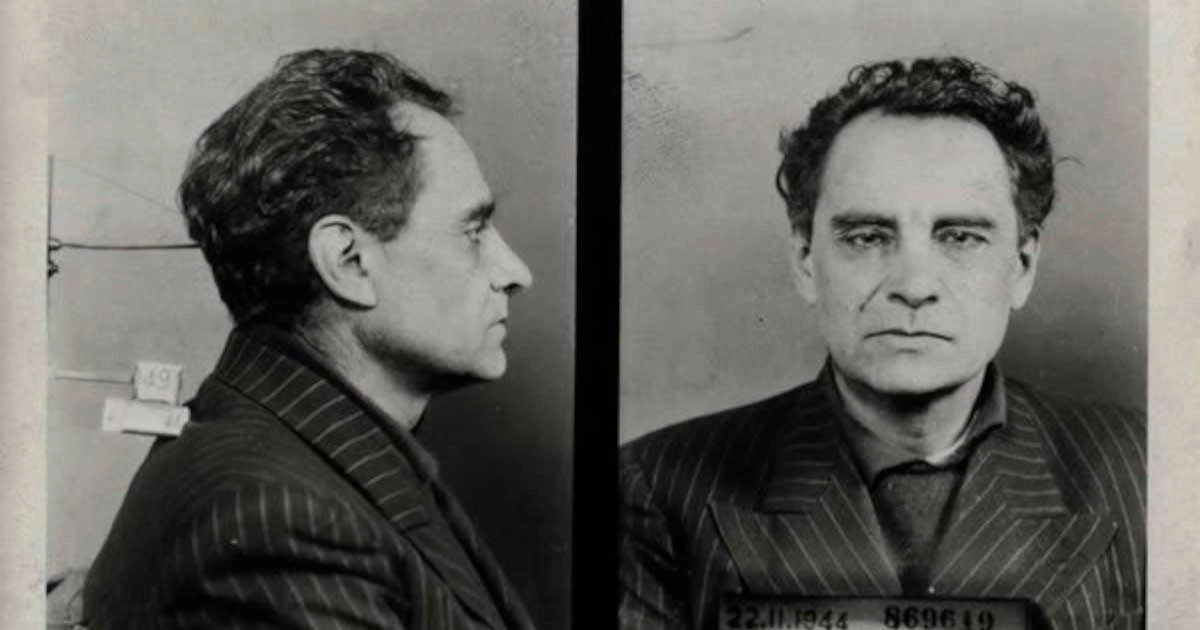
For a criminal to stand out amid the horrors of World War II, their actions must be exceptionally monstrous. Marcel Petiot—infamously known as “Dr. Satan”—was one such figure. Operating in France during the Nazi occupation, Petiot exploited fear, desperation, and chaos to become one of the most chilling serial killers in European history.
Born on January 17, 1897, in Auxerre, France, Petiot showed disturbing behavior from an early age. As a child, he brought his father’s gun to school and fired it without provocation, later attempting to coerce another boy into sexual activity. These incidents marked the beginning of a long pattern of criminality and psychiatric intervention. Throughout his adolescence, Petiot was repeatedly expelled from school, arrested for theft, and evaluated by psychiatrists, often escaping serious punishment due to diagnoses of mental illness.
Despite his troubled past, Petiot enlisted in the French army during World War I. His service was brief and chaotic, punctuated by injuries, alleged breakdowns, theft from fellow soldiers, and repeated hospitalizations. By the war’s end, he was discharged with a pension, having learned little discipline but gaining access to opportunities he would later exploit.
After the war, Petiot enrolled in an accelerated education program for veterans and, astonishingly, qualified as a doctor within eight months. By 1921, he was practicing medicine. While initially maintaining a low profile, he soon reverted to fraud—overprescribing addictive drugs, double-billing patients and the state, and allegedly performing illegal abortions. In 1926, the disappearance of Louise Delaveau, the daughter of a patient and likely Petiot’s first murder victim, raised suspicions, though no charges followed.
That same year, Petiot’s charm carried him into politics, where he became mayor of Villeneuve-sur-Yonne. His tenure was riddled with scandal, including embezzlement and fraud, yet he repeatedly avoided lasting consequences. By the early 1930s, he relocated to Paris, reinventing himself once more as a respected physician while continuing a life of deception and theft.
World War II marked the darkest chapter of Petiot’s life. Avoiding forced labor under German occupation, he adopted the alias “Dr. Eugène” and claimed to operate an escape network for Jews, resistance fighters, and others fleeing Nazi persecution. For a hefty fee, he promised safe passage to South America. Instead, he murdered his victims with cyanide injections, stole their valuables, and disposed of their bodies in the Seine, quicklime pits, or fires.
Petiot’s crimes came to light in March 1944 when police investigating foul odors at his Paris home uncovered human remains. Though he initially escaped, he was arrested after the liberation of Paris later that year. At trial, he claimed to be a resistance hero, but his lies unraveled. Convicted of 26 murders, Marcel Petiot was executed by guillotine on May 25, 1946.
Dr. Satan likely killed far more than the courts could prove. His story remains a grim reminder of how extreme evil can flourish when war causes society to fracture and oversight collapses.