
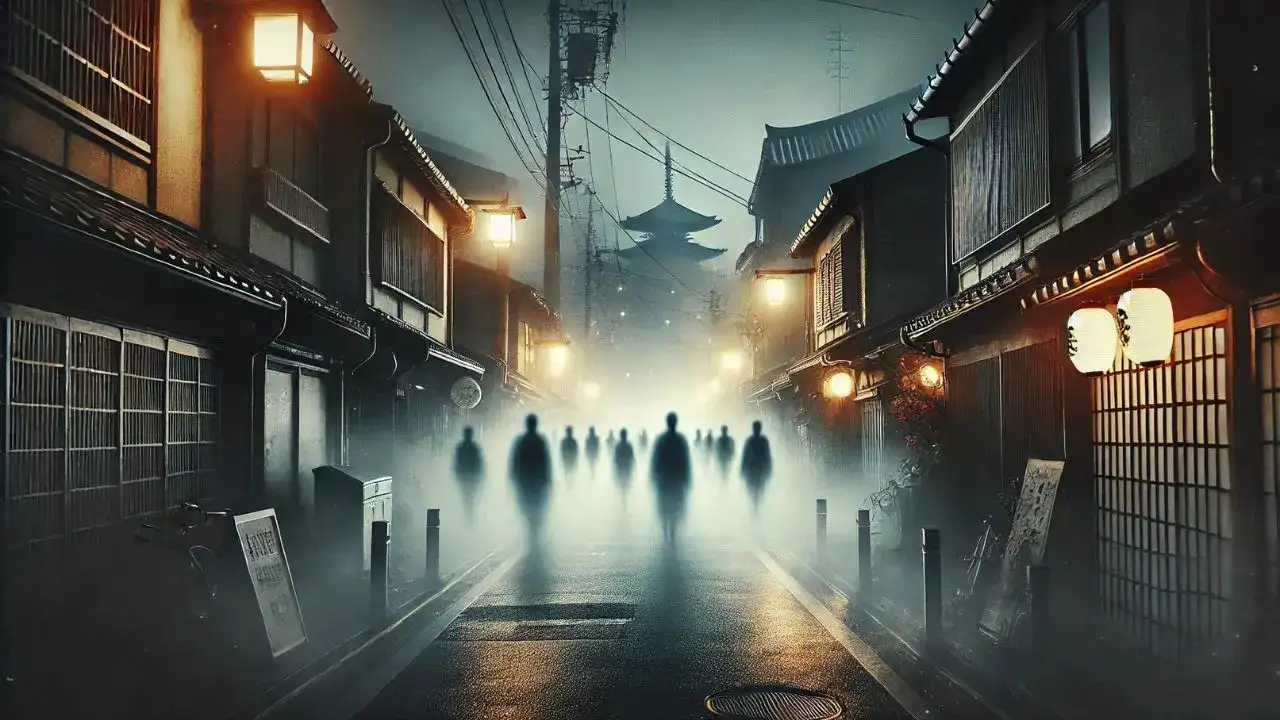
Every year in Japan, around 90,000 people are reported missing. While many are located within days, a significant number disappear permanently, becoming part of a little-known phenomenon known as “johatsu,” or “evaporated people.”
The term refers to individuals who deliberately vanish from their lives, often without leaving a trace. Unlike typical missing persons cases, johatsu are not always victims of crime. Instead, many choose to disappear voluntarily, seeking escape from overwhelming personal circumstances.
Financial problems are one of the most common reasons. Crushing debt, job loss, and economic pressure can drive individuals to abandon everything rather than face social shame or legal consequences. In Japan’s highly structured society, failure is often deeply stigmatised, making disappearance seem like a viable alternative.
Family issues also play a major role. Some leave to escape abusive relationships, unhappy marriages, or strained family dynamics. Others simply feel unable to meet expectations placed upon them by society or loved ones.
The phenomenon has become so established that an entire underground industry has emerged to support it. Companies known as “yonigeya,” or “fly-by-night movers,” specialise in helping people disappear quickly and discreetly. These services typically operate at night, relocating clients and their belongings to new locations while ensuring minimal trace is left behind.
In some cases, people seeking to vanish will cut off all contact, abandon their identities, and start new lives under the radar. They may take on cash-based jobs, avoid official registration systems, and move frequently to avoid detection.
One widely known case highlighting the darker side of disappearances is that of Tiphaine Véron, a French woman who went missing in Japan in 2018. Unlike voluntary cases, her disappearance remains unresolved and is treated as a potential criminal matter. Her case has drawn international attention and raised concerns about how missing persons cases are handled.
The existence of johatsu raises a critical question: in today’s digital world, is it still possible to truly disappear?
Despite advanced surveillance systems, digital tracking, and widespread use of identification records, Japan’s system still leaves gaps that make disappearing possible. Many everyday activities, especially in lower-income or informal sectors, can still be conducted without leaving a strong digital footprint.
However, living as a johatsu comes with significant challenges. Without official identification, access to healthcare, stable employment, and housing becomes extremely limited. Life often becomes a day-to-day struggle focused purely on survival.
Experts say that while the ability to disappear still exists, it is becoming increasingly difficult as technology advances. At the same time, the social pressures that drive people to vanish remain deeply rooted.
The phenomenon of johatsu reveals a hidden side of modern Japan—one where individuals quietly step outside the system when they feel they can no longer cope within it.
As awareness grows, questions continue to be raised about whether more support systems could prevent people from reaching the point where disappearing feels like their only option.