Cambodia Postpones Release of Stranded Thais at Poipet Indefinitely
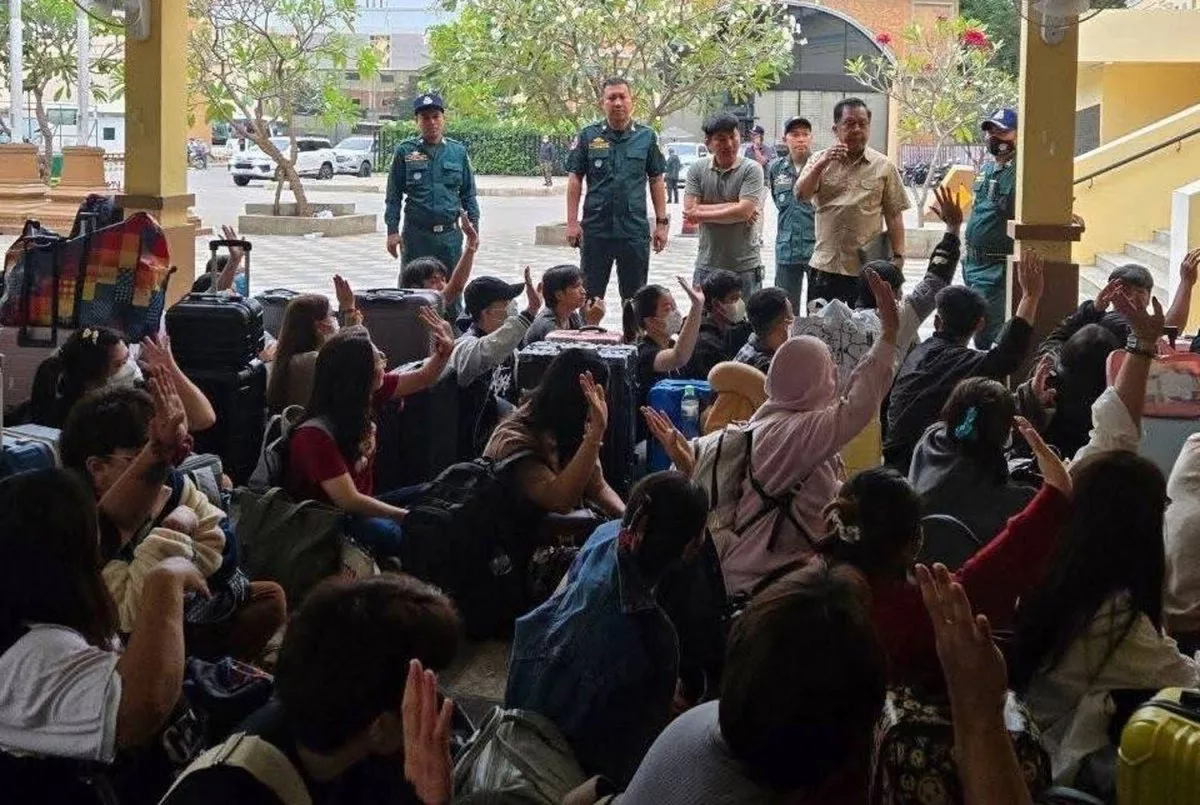
Thousands of Thai nationals remain stranded in Poipet on the Cambodian side of the border after Cambodian authorities indefinitely delayed their release, despite earlier assurances that they would be allowed to return home. The postponement, announced on Saturday, has heightened concerns over the humanitarian situation along the Cambodia–Thailand frontier.
Initially, Cambodian officials had agreed to temporarily open the Poipet border checkpoint, opposite the Khlong Luek crossing in Thailand’s Sa Kaeo province, between 1 p.m. and 4 p.m. on Saturday. The arrangement was intended to allow Thai nationals, many of whom had been working in Poipet’s casino and service industries, to cross back into Thailand amid escalating border tensions.
Thai authorities responded swiftly to the announcement, mobilising transport and personnel within 20 minutes. Preparations included deploying local songthaew trucks, military buses, disaster prevention vehicles, and rescue and ambulance teams to assist the sick, elderly, and other vulnerable individuals waiting to return.
However, just as the agreed window was about to open, Cambodian authorities informed their Thai counterparts that the release would not proceed. No alternative timetable was provided. As a result, Thai officials withdrew all personnel and vehicles from the checkpoint area, while police advised journalists to leave the vicinity for safety reasons.
Reports indicate that around 3,000 Thai nationals had gathered near the Poipet border as early as Thursday, carrying personal belongings and hoping to cross back into Thailand. Some were reportedly pushed away from the checkpoint by Cambodian soldiers as security measures were tightened.
The situation worsened later on Saturday when Cambodia’s Interior Ministry announced the suspension of all entry and exit movements at Cambodia–Thailand border crossings until further notice. The decision followed a call by Cambodian Senate President Hun Sen, who cited safety concerns and the risk of harm to civilians during ongoing hostilities. Writing on his official Facebook page, the former prime minister urged the government to halt cross-border travel for both Thai and Cambodian citizens.
Thai officials estimate that between 6,000 and 7,000 Thai nationals have registered to leave Cambodia since the latest outbreak of fighting. In contrast, Thailand’s Burapha Task Force stated that it had repatriated over 7,000 Cambodian nationals earlier this month without conditions, emphasising that civilians should not be used as leverage in a military conflict.
Thailand’s Ministry of Foreign Affairs criticised Cambodia’s actions, stating that preventing Thai nationals from returning home violates international human rights principles. Foreign Affairs Minister Sihasak Phuangketkeow stressed that allowing people to return to their homeland is a fundamental humanitarian matter and noted that Thailand has never obstructed Cambodian citizens wishing to go home.
As diplomatic efforts continue, thousands of stranded Thais remain in uncertainty, awaiting a resolution to what has become both a humanitarian and diplomatic challenge.