Gangland Killing at a Funeral Shocks Idyllic French Island
What should have been a solemn farewell in a quiet Corsican village turned into a scene of horror that has shaken the Mediterranean island to its core. Mourners had gathered in Vero, a small village about half an hour from Ajaccio, to attend the funeral of the mother of Alain Orsoni, a former nationalist leader whose life had long been entangled with violence, power and exile.
Among the crowd stood Orsoni himself, 71, who had returned from Nicaragua, where he had been living in exile, to bury his mother. As the ceremony was under way, a single gunshot rang out from nearby scrubland. Orsoni collapsed and died instantly, killed in cold blood in a cemetery many Corsicans consider as sacred as a church.
Even on an island hardened by decades of vendettas and underworld feuds, the location and timing of the killing stunned residents. “A cemetery is sacred in Corsica,” said Jo Peraldi, a close friend of Orsoni, speaking to Corsican radio. “Never in my life have I seen someone murdered while accompanying their mother to her final resting place.”
Corsica, home to about 350,000 people, has recorded 35 fatal shootings in the past three years alone, giving it one of the highest murder rates in France. Farmers, lawyers, elected officials and business owners have all been victims over the years. Yet many islanders say Orsoni’s killing marked a new and disturbing threshold.
“People don’t kill in cemeteries. It’s intolerable,” said Christian Leca, a cousin of the victim, in an interview with Le Monde. For him, the assassination was a “tipping point in the horror” that has come to define life on the island.
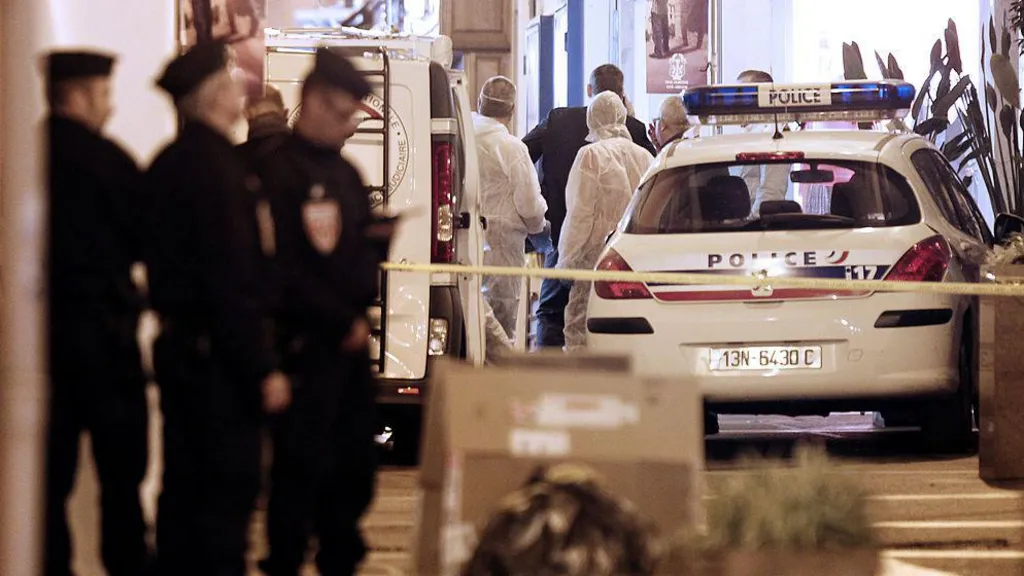
The day after the killing, Alain Orsoni was cremated following a funeral service in Ajaccio, under heavy police protection. Armed officers and security checks underlined the sense that violence could erupt again at any moment.
Investigations are being led by judges in Paris who specialise in organised crime, working alongside the regional prosecutor’s office in Marseille. Corsica’s regional president, Gilles Simeoni, described the murder as further evidence of “mafia pressure that weighs heavily on Corsican society.”
“Orsoni was a major contemporary figure in Corsican nationalism, both in the open and in the shadows,” Simeoni said, acknowledging the complex legacy left behind by the slain figure.
That legacy stretches back decades. In his younger years, Alain Orsoni was a prominent player in the Corsican nationalist movement and spent 15 years in prison for organising bomb attacks against symbols of the French state, part of a broader campaign for autonomy or independence. Over time, however, the movement fractured, and many of its former militants drifted into organised crime.
“Once armed groups gave up their violent campaign for autonomy or independence, they kept their weapons and turned to organised crime instead,” explained Thierry Dominici, an expert on Corsican nationalism at the University of Bordeaux who grew up on the island. “The French state was so focused on tackling separatism that it turned a blind eye to their lucrative criminal activities.”
According to Dominici, Corsican organised crime differs from the Italian mafia. The island’s clans are not bound by blood ties or rigid rituals, but by opportunism. Alliances are fluid, rivalries intense, and vendettas can stretch across generations.
The Orsoni family has long been synonymous with this violent history. Alain’s brother, Guy Orsoni, was killed by a rival clan in 1983. His son is currently in prison for drug trafficking and attempted murder. Alain himself survived multiple assassination attempts before fleeing to Central America during one of the island’s bloodiest feuds.
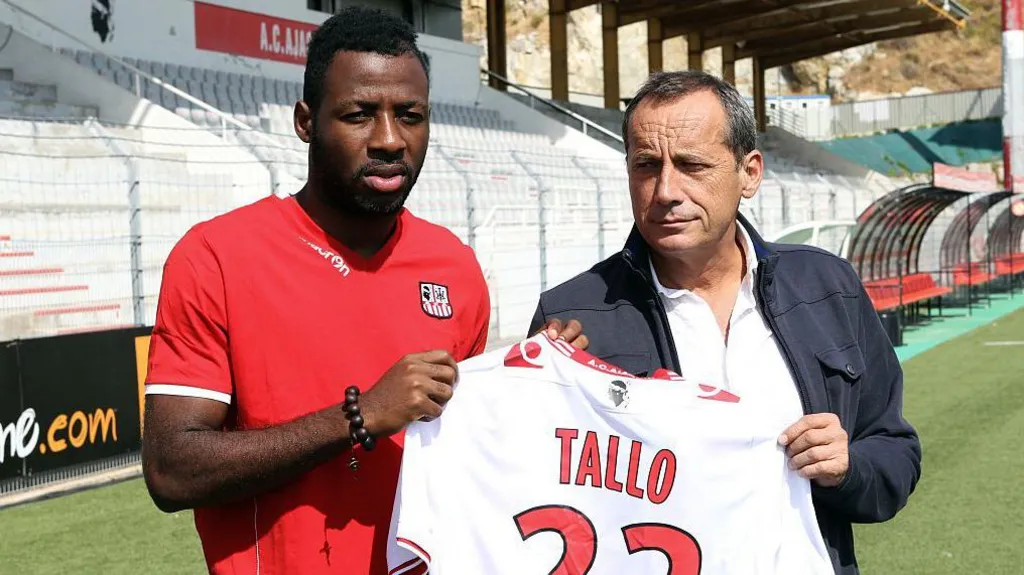
In exile, he reinvented himself as a casino investor. Later, he returned to Corsica and took over as president of AC Ajaccio, the island’s best-known football club. Under his leadership, the club enjoyed a remarkable rise, even securing promotion to France’s top division, Ligue 1. Big-name signings followed, including Mexico’s star goalkeeper Guillermo Ochoa.
Despite the glamour, danger was never far away. When journalists met Orsoni in 2012, he wore a bullet-proof vest and travelled in an armoured car with tinted windows. His office was not a sunlit suite overlooking the Bay of Ajaccio, but a windowless concrete bunker deep inside the stadium complex. He refused to walk around town, saying it was not safe.
Known for his good looks, melodic southern accent and a resemblance to French actor Yves Montand, Orsoni could be charming and disarming. But there was also an edge. When asked about his reputation as the “godfather of Corsica,” he once replied with a smile: “Yes, I’m the godfather — but only to my grandchildren.”
His role in French football brought him into contact with establishment figures and politicians, including former president Nicolas Sarkozy. Yet critics were uneasy. One local prefect admitted discomfort at the idea that Orsoni might be using football to polish his image.
“It’s true I have an unusual background for a football club president,” Orsoni once conceded. “But impressions can change when you meet people.”
Violence, however, continued to follow him. His lawyer, Antoine Sollacaro, was murdered at a petrol station in Ajaccio just weeks after speaking publicly. In recent years, AC Ajaccio fell on hard times, and Orsoni eventually returned to Nicaragua, remaining president until only months before his death.
Why was he killed now? Police say the list of possible enemies is long, with feuds that stretch back decades. Alain Bauer, a criminology professor and former adviser to French governments, said the killing itself was not surprising — only its timing and setting.
“That Alain Orsoni was killed does not surprise me. It was a question of when, not if,” Bauer said. “But an assassination in a graveyard in Corsica is shocking. It’s almost certain there will be revenge killings. In the end, the main victims are the Corsicans themselves.”
Amid the fear and anger, one of the island’s most respected voices has called for calm. Cardinal François Bustillo, the bishop of Ajaccio, urged Corsicans to reject the cycle of vengeance.
“We must not get used to this eye-for-an-eye, tooth-for-a-tooth violence,” he said. “We cannot allow Corsica to drift towards its demons. Mentalities must change.”
Whether that plea will be heard remains uncertain. For now, the gunshot that echoed through a cemetery in Vero continues to reverberate across Corsica, a brutal reminder that even in its most sacred spaces, the island has not escaped the grip of violence.