
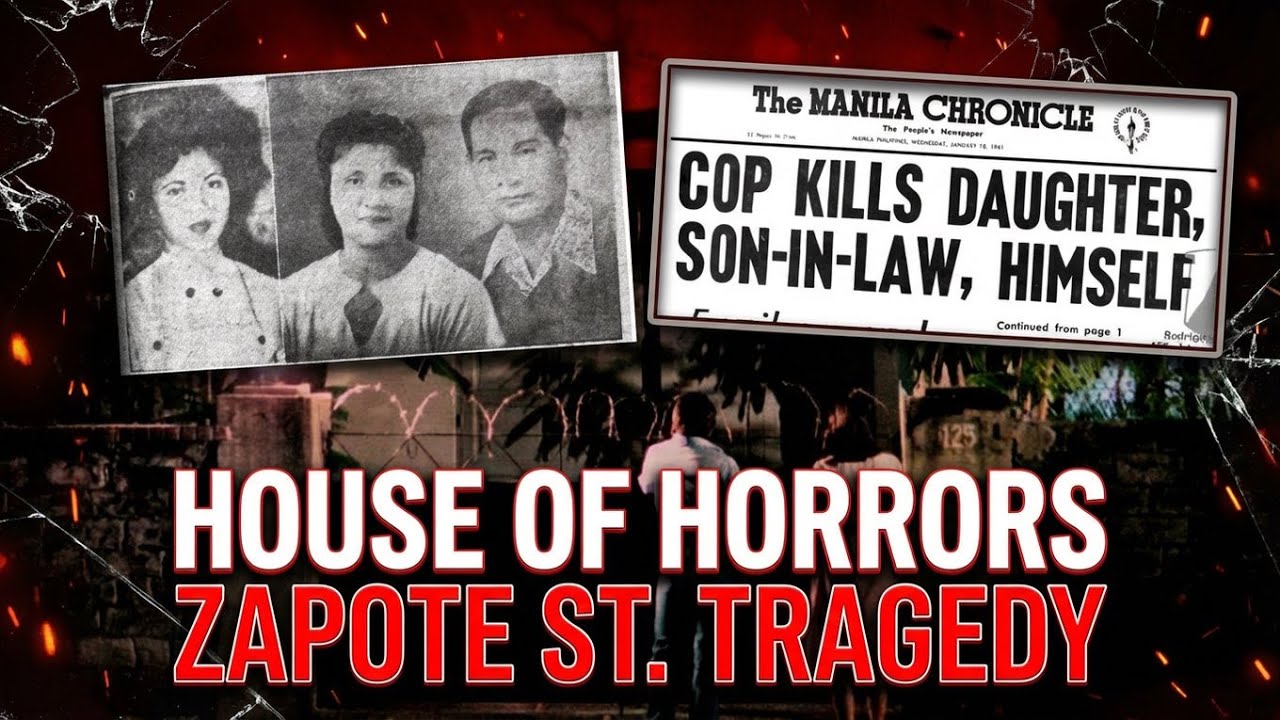
On the afternoon of January 18, 1961, a quiet residential neighborhood in Makati became the setting for one of the most horrifying family massacres in Philippine history. What unfolded inside the Cabading family home at 1074 Zapote Street was a tragedy born from obsession, control, and a father’s inability to accept his daughter’s independence.
More than six decades later, the case remains one of the country’s most infamous true crime stories. It inspired literature, film, and endless debate about the dangers of toxic family dynamics and authoritarian parenting.
A Family That Appeared to Have Everything
To outsiders, the Cabading family represented success and stability.
Detective Pablo Cabading, 48, was a respected investigator with the Manila Police Department. His career had earned him a reputation as a disciplined law enforcement officer. He lived comfortably with his wife, Asuncion, and their only child, Lydia.
Lydia Cabading was everything a parent could hope for. At just 24 years old, she had become a physician and was regarded as intelligent, ambitious, and devoted to her family. Her future seemed bright.
But beneath the appearance of prosperity and respectability lurked a disturbing reality. Friends and acquaintances later described Pablo Cabading as a man who exercised near-total control over his household. His authority was absolute, and his daughter remained the center of his world.
That control would eventually become deadly.
The Marriage That Triggered a Crisis
The conflict began when Lydia fell in love with Leonardo Quitangon, a 36-year-old professor at the University of Santo Tomas College of Medicine.
To most people, Leonardo appeared to be an ideal match. He was educated, respected, and shared Lydia’s professional background in medicine.
Pablo Cabading saw things differently.
He strongly opposed the relationship and reportedly viewed Leonardo as a threat to his influence over his daughter. When Lydia married Leonardo in October 1960 despite her father’s objections, tensions escalated dramatically.
According to accounts of the case, Cabading demanded that the newlyweds continue living under his roof. The couple hoped to establish their own life together, but the detective refused to relinquish control.
What should have been a joyful new chapter became the beginning of a nightmare.
Obsession Turns Dangerous
As the dispute intensified, Pablo Cabading’s behavior reportedly became increasingly erratic.
The retired detective allegedly monitored the movements of the newlyweds and reacted with anger whenever they attempted to distance themselves from him. Some reports suggest that he even pursued them after they briefly relocated to Cavite in an effort to gain independence.
Determined to bring them back under his authority, Cabading reportedly used emotional manipulation and deception. One account claims he persuaded Lydia and Leonardo to return by telling them that Asuncion was gravely ill and needed them at home.
Whether motivated by desperation, fear, or obedience, the couple returned to Zapote Street.
It would prove fatal.
The Massacre
On January 18, 1961, the family gathered inside the Cabading residence.
At some point during the afternoon, Pablo Cabading ushered his wife, daughter, and son-in-law into an upstairs bedroom and locked the door.
What happened next was a horrifying act of violence.
Armed with his service pistol, Cabading opened fire on the occupants of the room.
Neighbors soon heard gunshots and rushed to investigate. When authorities finally forced entry into the bedroom, they discovered a gruesome scene.
Lydia and Leonardo lay dead, their bodies riddled with bullets. Reports indicated that the couple died close together, victims of a father determined to prevent their future together.
Asuncion Cabading had also been shot multiple times but somehow survived her injuries.
Pablo Cabading himself was found critically wounded from a self-inflicted gunshot wound to the head.
The room was covered in blood, marking the end of a family torn apart by obsession.
The Victims
Dr. Lydia Cabading-Quitangon
At just 24 years old, Lydia was beginning a promising medical career. She had chosen love and independence, decisions that ultimately placed her in direct conflict with her father’s demands.
Professor Leonardo Quitangon
Leonardo, a respected medical professor, became the target of Pablo Cabading’s resentment. To the detective, he represented the man who had taken his daughter away.
Asuncion Cabading
Asuncion survived the massacre but lost both her daughter and son-in-law. Some accounts suggest she attempted to protect Lydia during the shooting, suffering multiple gunshot wounds in the process.
Pablo Cabading
The architect of the tragedy was a man once entrusted with enforcing the law. His inability to accept change and independence transformed him from investigator to killer.
A Crime That Inspired Literature and Film
The shocking nature of the murders captured national attention and became part of Philippine cultural history.
Acclaimed writer Nick Joaquin later explored the case in his celebrated true-crime work The House on Zapote Street, examining the psychological and social factors behind the tragedy.
Years later, acclaimed filmmaker Mike de Leon adapted the story into the critically acclaimed film Kisapmata. The movie remains one of the most disturbing and respected works in Philippine cinema.
A Warning That Still Resonates Today
More than sixty years later, the Cabading family murders continue to raise uncomfortable questions about authority, control, and family relationships.
At its core, the tragedy was not simply a murder case. It was the story of a father who viewed his daughter’s independence as an act of betrayal. It was a household ruled by fear rather than trust, where control became more important than love.
The bloodshed on Zapote Street serves as a chilling reminder that possessiveness can become destructive when taken to extremes. Families are meant to nurture growth and independence, not suppress them.
The house itself has long since faded into history, but the lessons remain relevant. Whenever authority becomes obsession, and love becomes ownership, the seeds of tragedy are planted.
More than six decades after the gunfire echoed through the neighborhood, the question still lingers: could a similar tragedy happen again? The answer depends on whether society continues to challenge the toxic patterns of control that contributed to one of the Philippines’ most haunting crimes.