
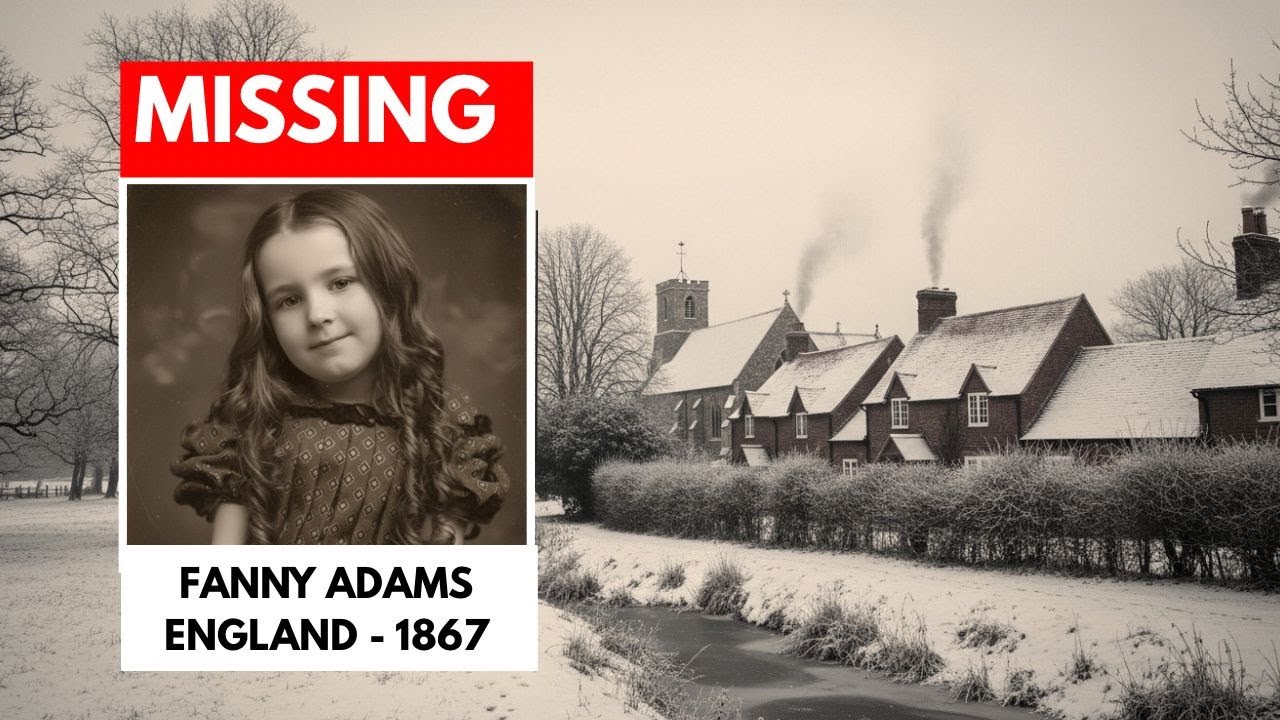
Murder of Fanny Adams: The Crime That Shocked Victorian England
The murder of eight-year-old Fanny Adams in 1867 remains one of the most infamous crimes in British history. The brutal killing horrified Victorian society, generated widespread media coverage, and even left a lasting mark on the English language. More than 150 years later, the case continues to fascinate historians and true crime enthusiasts alike.
A Quiet Village Shattered
Fanny Adams was born in the small village of Alton in Hampshire, England. Like many children of the era, she spent her days helping her family and playing with friends in the countryside. On the afternoon of 24 August 1867, Fanny left her home with her younger sister and a friend to play in a nearby meadow.
As the children wandered through the fields, they encountered Frederick Baker, a 29-year-old solicitor’s clerk. Baker was known in the local community and appeared respectable, making him seem harmless to the young girls. Witnesses later reported seeing Baker speaking with Fanny before she disappeared.
When Fanny failed to return home that evening, her family became concerned. A search of the surrounding area began almost immediately. Villagers, police, and volunteers combed the countryside in a desperate effort to find the missing child.
A Horrific Discovery
The following day, searchers made a gruesome discovery. Parts of Fanny’s dismembered body were found scattered in a nearby hop garden. The brutality of the crime shocked even seasoned investigators. Additional remains were recovered over the following days, confirming that the young girl had been murdered in a particularly savage manner.
Victorian England was no stranger to violent crime, but the murder of a child and the extent of the mutilation generated outrage across the nation. Newspapers carried detailed reports of the case, often describing the horrific evidence in graphic terms. Public interest grew rapidly as authorities searched for the killer.
Frederick Baker Becomes the Prime Suspect
Suspicion quickly fell on Frederick Baker. Several witnesses had seen him with Fanny shortly before her disappearance. Investigators also discovered that Baker had behaved strangely after the murder and had attempted to provide questionable explanations regarding his whereabouts.
Perhaps most damning was a diary entry Baker wrote shortly after the crime. In it, he appeared to reference the murder in a manner that investigators found deeply disturbing. While Baker denied any involvement, the mounting evidence against him became difficult to ignore.
Police arrested Baker, and he was charged with the murder of Fanny Adams. The case attracted enormous attention from both the press and the public. Crowds gathered outside the courthouse, eager to learn the details of one of the most shocking crimes of the Victorian era.
The Trial
Frederick Baker’s trial began in December 1867 at Winchester Assizes. Prosecutors presented witness testimony, physical evidence, and Baker’s own writings as proof of his guilt.
The defence attempted to portray Baker as mentally unstable and argued that the evidence was circumstantial. However, the prosecution successfully demonstrated that Baker had both the opportunity and means to commit the crime.
The jury took little time to reach a verdict. Baker was found guilty of murder and sentenced to death. Throughout the proceedings, public opinion remained overwhelmingly against him.
Following his conviction, Baker continued to proclaim his innocence. Nevertheless, the evidence convinced both the court and the public that justice had been served.
Execution and Aftermath
On 24 December 1867, exactly four months after the murder, Frederick Baker was executed by hanging outside Winchester Prison. Thousands of spectators reportedly attended the execution, reflecting the intense public interest surrounding the case.
The murder left a deep scar on the community of Alton. Fanny Adams became a symbol of innocence lost, and her tragic death remained a topic of discussion for generations.
Today, a memorial in Alton commemorates her life and serves as a reminder of the tragedy that shocked the nation.
The Origin of the Phrase “Sweet Fanny Adams”
One of the most unusual legacies of the case is its connection to the phrase “Sweet Fanny Adams.” Following the murder, sailors in the Royal Navy began using the term sarcastically to describe the tinned meat they were issued as rations.
Because the meat was chopped into small pieces, sailors jokingly compared it to newspaper descriptions of the dismembered remains of Fanny Adams. Over time, the phrase evolved into a slang expression meaning “nothing at all” or “very little.”
Although many people still use the phrase today, few realize its dark and disturbing origin.
A Crime Remembered
The murder of Fanny Adams remains one of Britain’s most notorious Victorian-era crimes. The case highlighted the vulnerabilities of children, demonstrated the growing influence of newspapers in shaping public opinion, and exposed the darker side of Victorian society.
More than a century and a half later, the story continues to be remembered not only because of its shocking brutality but also because of its lasting cultural impact. Fanny Adams herself was an ordinary child whose life was tragically cut short, yet her name became permanently woven into British history.
The case serves as a reminder of how a single crime can leave an enduring legacy, influencing language, culture, and public memory long after the events themselves have passed into history.